


Lost a Toenail? Healing Timeline, Care Tips & When to See a Doctor | Foot Clinic
If you’re a runner currently staring at a toe with a missing toenail, welcome to a very weird club. Yes, it’s a club, because despite most of us doing what we can to prevent it, it’s a surprisingly common thing. Congrats, here’s a tub of Neosporin.
Written & edited by Pavlína Marek
Now, don’t go telling your toenails off for being weak. In runners, the process of losing a toenail is often mechanical, like poor shoe fit, feet swelling during long runs, toe slams on descents, and high mileage.
- How to tell if the nail is truly gone or just loose
- What to do in the first 24 to 48 hours
- A realistic week by week healing timeline
- Red flags that need a clinician
- How to run safely (or when not to)
A piece of sincere warning: I can’t stop you from looking up pictures on the internet. However, I would advise you to either stick with what visuals I provide here or keep your own research for when you haven’t just eaten dinner.
I have taken care of runners’ feet, including toenails, in all stages of ‘decay,’ and even my desensitized self didn’t fancy seeing the things I’ve seen when doing research for this article.
Why Runners Lose Toenails
Toenails don’t just randomly fall off. Most of the time, it goes something like this: the toe takes repeated hits, blood and fluid collect under the nail (called a subungual hematoma), the nail plate starts to loosen, and eventually the toenail lifts and falls off. This process usually takes several days to weeks but can also be much quicker and much more traumatic.
For runners, this happens mostly because of the toe hitting the front of the shoe, pressure from a tight toe box, and/or swelling that makes your normal shoe suddenly feel small. Downhill running is a classic trigger because if your shoes are a bit loose, your foot slides forward and your toes take the hit. Add long mileage, hot weather, or a sudden training jump, and it’s easy to see how toenails become collateral damage.
Is It Actually “Lost,” or Just Loose?
Before you do anything dramatic, figure out which stage you’re in. A lot of people still have a partially attached nail, and ripping it off can make healing slower and more painful.
A loose toenail will look, feel, and behave like this:
- Tenderness at the tip of the toe or under the nail. Still attached. DO NOT REMOVE.
- Dark discoloration (purple, red, black) from bruising or blood under the nail. Likely still mostly or completely attached. DO NOT REMOVE.
- Lifting at the edge, often the front or one side. Still mostly attached. DO NOT REMOVE.
- Partial tear. Part of the nail is detached, part is still stuck. If it’s catching on clothing, you can try to trim the loose parts or visit a podiatrist. In some cases, there might be need for complete removal by a healthcare professional.
A toenail is completely lost to the running gods when the nail plate is off and the nail bed is exposed. It can still be held by the skin near the nail bed, nail folds and hyponychium.
What Partial Avulsion Looks Like (And Why You Shouldn’t Yank It)
A partial avulsion means the nail is still attached on one side or near the base. (It’s what’s described in points 3 and 4 above.) It might flap, snag on socks, or look like it’s barely hanging on.
It’s tempting to pull it off. Don’t. First of all, it will hurt like hell. Secondly, if the attached portion is still well anchored, forcing it can tear the nail bed, increase bleeding, increase infection risk, and make the new nail grow back wrong.
If it’s loose and jagged, you can trim only the parts that are clearly detached (more on that below).
Is the nail bed exposed or still covered?
This changes your care plan.
Exposed nail bed looks pink or red and feels raw and super sensitive. It often bleeds. This needs more attention to cleaning and protection from friction.
Still covered nail bed is the better option. If the nail is still mostly in place, it acts like a natural shield. Your goal is to avoid further lifting and keep the surrounding area clean.
Acute trauma vs repetitive running microtrauma
Acute trauma happens when you kick something, drop a weight, jam the toe, and the nail immediately turns dark and painful or, in worse scenarios tears off completely.
Repetitive microtrauma is when the toe slowly gets sore, then discolored, then the nail loosens over days or weeks. Both situations can result in a missing toenail, but repetitive trauma is the classic runner story.
It’s Actually Lost: What to Do In the First 24–48 Hours

Gruesome? Yeah. Did it work? Also yeah. Should you do it? No. (When the runner got back home, she had to have it surgically removed and properly re-cleaned.)
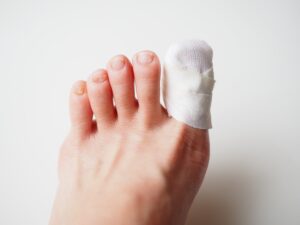
If the nail is off (or mostly off) and the area is tender, treat it like a skin injury that absolutely hates friction. (Ever had a road rash?)
1) Clean it gently
Wash the wound with mild soap and water rinse well, and pat dry (don’t rub!)
Avoid putting harsh stuff directly on raw tissue (like pouring strong hydrogen peroxide or alcohol into the nail bed). Those can irritate healing skin. If you prefer an antiseptic, use something gentle and use it sparingly.
2) Control bleeding (if present)
If it’s bleeding, apply firm pressure with clean gauze or a clean cloth for 10 to 15 minutes without constantly checking and elevate the foot.
Bleeding should slow down and stop with pressure. If it doesn’t, seek the help of a medical professional.
3) Control pain and swelling
Apply a cold pack (wrapped, not directly on skin) for 10 to 15 minutes at a time. Keep any activity light if throbbing is intense. Over-the-counter pain relief can help if it’s safe for you based on your health history and other meds.
4) What if the nail is partially attached?
If the nail is still holding on for dear life, I’ll repeat what I said earlier; do not forcibly remove the part that’s still attached and stable. You can trim only jagged or clearly detached edges so it stops catching on socks.
If you are unsure whether it’s attached to living tissue, err on the side of leaving it and protecting it.
5) When to avoid running immediately
Skip running for now if the pain is significant when walking, the nail bed is open and rubbing in your shoes, you suspect a fracture (especially after a hard impact), or you can’t keep it clean and protected during exercise.
One or two rest days early can save you weeks of irritation later.
Healing & Missing Toenail Regrowth Timeline
There are really two timelines happening at once. First, your skin and nail bed will start healing. This is the part where it stops hurting. Second, unless you’ve done some incredibly serious damage to the nail matrix, your nail will regrow. Your nail never actually stops growing, so these two things will be happening at once, but the regrowth process is extremely slow.
Days 1–3: raw and sensitive
The nail bed may feel exposed and sting with pressure. Mild clear drainage can happen early on. Walking in shoes often hurts. Your job is to keep the wound clean, dry, and protected from friction.
Days 4–7: tenderness starts to calm down
Pain usually drops a lot if the injury is kept protected. The surface starts forming a tougher layer, which usually doesn’t look like a normal scab you’d get after you scrape a knee. You may notice scabbing or a thin protective covering forming.
Weeks 2–3: the area feels normal faster than it looks
Weeks 4–8: early nail regrowth becomes visible
You may see a new nail edge appear near the base (cuticle area). The new nail can look uneven, dull, or slightly bumpy at first.
Months 3–6 (sometimes longer): nail grows in noticeably
Toenails grow slowly, and big toes are the slowest. It can take many months for a nail to look “back to normal.” A realistic expectation for full regrowth is several months for smaller toes and 6 to 18 months for the big toe. Yes. It’s slow. And it will also probably look a little weird for even longer.
What “Normal” Regrowth Can Look Like
Even with perfect care, the new nail may temporarily have ridges, uneven thickness, slight discoloration, or a rough edge as it grows out. Even at the end, you’re not guaranteed the same nail as you had before—sometimes, nails can continue to grow thicker and a little weird, which can cause further issues later on.
Healing and regrowth can be slower if the nail bed or nail matrix was injured, you keep re-irritating it by running through pain, there’s infection, or the circulation is poor (or you have conditions that affect healing).
You will feel fine long before the nail is back. You might be a “missing toenails runner” for a while.
Why the New Nail Can Grow Back Weird (And How to Improve Your Odds)
The nail is made in the nail matrix near the base of the nail. If the matrix gets damaged, the nail can grow back with long-term changes. Common regrowth issue include ingrown edges, thickening, ridges or waves, splitting, or partial attachment (nail doesn’t lay flat).
How to Reduce Deformities
You can’t control everything, but you can improve the odds of your toenail growing back normal by protecting it from repeated trauma while it grows back. Also, don’t pry or peel the new nail as it emerges, keep the area clean and dry, and keep friction low in shoes.
Trimming Strategy
Trim your nails straight across, without curve. Take off only small amounts at a time and avoid digging aggressively into corners, because that’s how ingrown nails get started. The treatment for those is partial ablation. Don’t google it during mealtimes.
Red Flags for When a Missing Toenail Needs Medical Attention
Most runner toenail losses heal fine at home. If you’ve ever gone to a race or a run club run, chances are that many of your fellow runners had fewer than ten toenails. However, there are some situations when you should visit a clinician.

Signs of Infection
Get medical advice if you notice spreading redness, warmth and swelling that’s getting worse, pus, foul odor, or cloudy drainage, fever, or increasing pain after the wound originally improved. Any one of those should guarantee a visit to a medical professional.
Large Hematoma with Intense Pressure
If you have or had severe throbbing pressure under the nail, you might have a large blood collection. Drainage, when needed, should be clinician-guided.
If you look, you will find ways to deal with it at home. However, DIY drilling into nails is one of those internet ideas that can go really wrong really fast. Translation: DON’T DO IT.
Possible Fracture
If the event of losing your toenail was more traumatic, consider evaluation if the toe bone is extremely tender, the toe looks crooked or deformed, you have sharp pain with gentle pressure on the tip of the toe, or when walking is very painful.
Higher-Risk Situations
If you have diabetes, poor circulation, neuropathy (reduced feeling), or immune suppression, use a much a lower threshold to get checked. Small foot problems can escalate faster in these cases.
Repeated Loss or Multiple Nails Involved
If toenails keep falling off, it’s time to zoom out. Re-evaluate the fit, shape, lacing, and brand of your footwear. Pay more attention to your running form and downhill habits. There’s also the possibility of a fungal infection, especially if nails are thick, yellow, or crumbly, so a visit to a podiatrist should be on your to-do list.
How to Run (Or Not) While You Have a Missing Toenail
The decision is mostly about friction control and whether the wound is closed.
Running is usually okay if the pain is mild to none and not worsening, the nail bed is closed or can be protected well, there’s no increasing redness, swelling, or drainage, and the toe is not bleeding after runs. (Yes, you need to check all of these boxes if you want to keep on running.)
Short-Term Training Modifications
If your answer to any of the above “green flag” points was a no, then you’ll need to reduce mileage for a week or two, avoid steep downhills, and choose softer, flatter routes if possible.
Sock & Shoe Strategy
These are things you preferably always do to take good care of your feet. Let’s remind ourselves of these foot care basics so you can not only heal up well but help prevent further issues.
Your socks should be snug (but not too small) and moisture-wicking with minimal seams in the toe area. Ultra-thin socks aren’t always the fest choice since they don’t cushion and prevent rubbing like thicker ones do. Go for slightly thicker socks, preferably made with wool.
Your shoes should have a roomier toe box. Definitely avoid the pair that caused the problem, at least for now. Use a heel lock (runner’s loop) lacing style to reduce sliding forward on descents.