

Why Running for Charity Matters & How You Can Make a Difference, Too
This year, runners at the London Marathon raised over £87.5 million for charities. That’s over $117,000,000. Imagine how much impact this amount of money can have. That’s people fed, cancer research funded, and conservation efforts made reality. You can be a part of that, too, simply by running.
Written & edited by Pavlína Marek
Why Should You Run for Charity?
You’re running anyway, so the question should rather be, “Why not?”
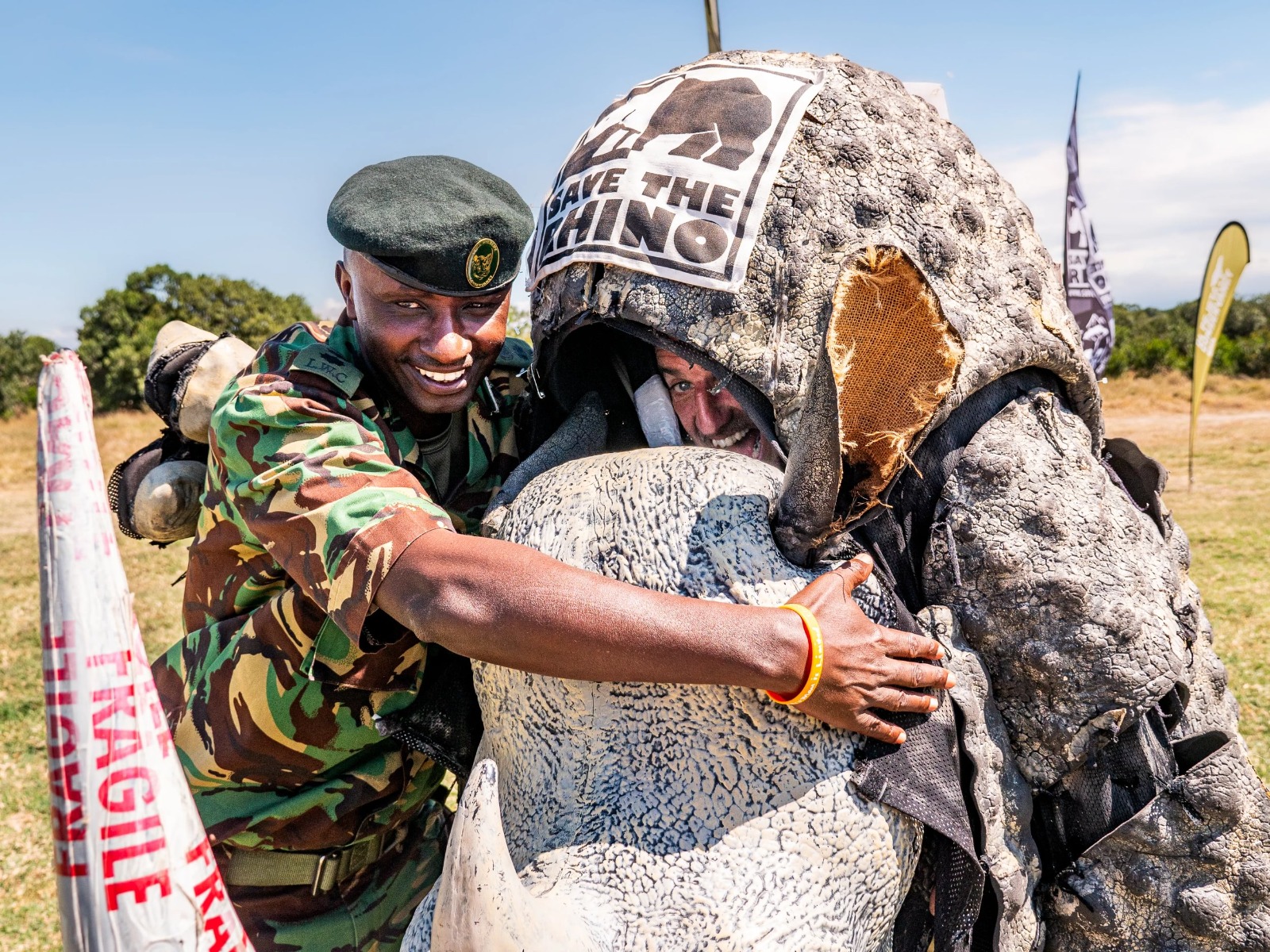
Edward Ndiritu is the Head of Anti-Poaching at Lewa Wildlife Conservancy in Kenya. For years, he’s seen and supported runners at the For Rangers Ultra as they conquered a five-day race across Laikipia while raising funds for two charities; For Rangers and Save the Rhino. This year, he himself donned a rhino costume and ran at the London Marathon to help raise funds.
Thanks to the collaborative work of teams across wildlife conservancies, charities who help support this work, and runners and donors who bring in the funds, Lewa has just reached ten years without a single poaching incident. (This means that no animals were poached. Unfortunately, rangers who risk their lives every day to save these animals do lose their lives in this ongoing war.)
“The secret to [our success] is collaboration… and caring for the community,” Ndiritu said.

Edward Ndiritu with RhinoBoy Chris wearing Save the Rhino’s running rhino costume. Credit: Will Roberts
For Rangers & Save the Rhino
Thanks to the work of For Rangers, the morale of the team is high. From dry socks and comfortable shoes to night-vision drones and a fully equipped gym, the charity has helped the men and women who protect these wild places and the communities that live there. It’s not just about the tangible things; simply knowing that so many people care helps.
This year, Save the Rhino was able to pay life insurance for 1,800 rangers at £14 ($18.70) per person. Being a ranger can be a dangerous job—and should something happen, the rangers’ families will be taken care of financially.
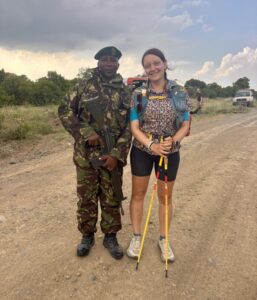
The author and John Mamba, one of the rangers who benefit from the work of For Rangers, during a 230km charity race.
Because running can go beyond getting fitter, reaching that PB, or improving your mental health. Because, suddenly, it’s not just, “I’m going to get in shape.” It’s, “I’m going to do this hard-ish thing and let it mean something for someone else too.” That shift is small, but it changes everything.
What Your Miles Actually Do
Charity running can be split into two very simple but impactful parts:
- Funds raised
- Attention created
Most people only focus on the first part: money. The fundraiser page. The awkward “donate if you can” post.
But the second part is hides the real power. Attention is how nonprofits grow. Attention is how new donors find them, how volunteers show up, how someone in need realizes help exists. Your miles create both.
1) Funds raised turns into real services.
This is the part most people know or can imagine, but it helps to say it anyway. Donations can become:
- meals for families
- shelter nights
- transportation vouchers
- medical supplies
- counseling sessions
- hotline staffing hours
- legal support
- community outreach
- research funding
- youth programs
- emergency relief
- education
- veterinary bills covered
- and much more…
2) Awareness is the multiplier nobody talks about.
Every time you post a training update, you’re telling people that “Hey, this cause exists, and I’m paying attention.” That reaches people who were never going to search for that nonprofit on their own. Not because they’re bad people. They’re just busy. Same as you.
“Don’t underestimate your voice,” said Thomas Lambert, an SHO Paediatritian and the founder of the Yeovil Distance Project. “[It’s a] domino effect. You don’t know where the conversation can lead to.”
Yeovil Distance Project & Tirop’s Angels
You can use running to bring attention to nearly anything you care about.
In 2024, Dr Thomas Lambert BMBS BSc visited Iten, a high-altitude training town in Kenya, and a home to some of the world’s best athletes. During his tour, he noticed wings painted on walls. Thus, he learned about Agnes Tirop and the NGO Tirop’s Angels.

Dr Thomas Lambert BMBS BSc
On September 12, 2021, runner Agnes Tirop set a new world record. Just a couple weeks later, she was murdered by her husband. Tirop’s Angels was born, “an organisation founded by Kenyan athletes and the late Agnes Jebet Tirop’s family, standing in unity against gender-based violence.”
Wanting to help, Lambert decided to use running as a way to bring light to the issue of gender-based violence and provide education for athletes who might not have access to the same coaches and training facilities others do.
He created the Yeovil Distance Project, a relay ultramarathon from Lands End to Yeovil District Hospital. The goal of the project is to bring awareness to and unite people against gender-based violence.

Celebration of unity against gender-based violence, Tirop’s Angels
As a part of the project, a free Endurance Running Teaching Series has been created to provide evidence-based content for teaching for Tirop’s Angels. It’s for anyone “from runners/endurance athletes who want to elevate their performance to Sports and Exercise Medicine Clinicians.”
Endurance Running Emergency Medicine Conference
An online Endurance Running Emergency Medicine Conference will take place on June 1, accessible to anyone from the beginner runners to the seasoned marathoner, from coach to a sports medicine professional. A donation of £35 to access the conference goes directly to the charity.
The conference will bring together chiropractors, nutritionists, and doctors, all of whom specialize in running events and runner care, as well as keynote speakers Kim Pannekoek, Rotterdam Marathon Medical Director, and Jasmin Paris, The Barkley Marathons and The Spine Race finisher.
Trust and Transparency: How to Choose a Charity
If you’ve ever hesitated to donate because you weren’t sure where the money goes, you’re not alone. A lot of us want receipts—not in a cynical way, but in an “I want to help effectively” way. When choosing a charity, focus on:
- Impact reporting: Does the nonprofit publish updates about what they did recently? Annual report, impact report, newsletters, project updates. Anything that shows they track outcomes.
- Restricted vs unrestricted funding: Restricted means money must be used for a specific program. Unrestricted means the nonprofit can use it where it’s most needed (often staff, operations, urgent gaps). Neither is automatically better. But it’s worth understanding what your fundraiser is supporting.
If you’re fundraising through an official race partner page, it’ll usually be clear whether it’s going to general support or a specific program.
The Underrated Personal Benefits of Running for Charity
Running for charity sounds selfless. And it is. But it also gives back, in a way that’s often underrated.
When I ran For Rangers Ultra, by all realistic standards, I wasn’t supposed to finish. But I did. Because it was something I cared about very much. It took me four years to save up enough money to be able to enter the race. I went through surgery only nine months before the start. I couldn’t—and didn’t—train nearly as much as I should have. But beyond personal achievement, there was this much bigger thing: I was running for a cause bigger than me.
But it also brought so much goodness into my life. New friends. More connections. New possibilities. A belief in my abilities. More confidence. The list goes on.
Motivation That Sticks
A lot of fitness goals die because they’re vague. Or because they’re built on vibes rather than concrete achievements, like “summer body.” (Which is a terrible coach, by the way.)
Purpose lasts longer.
When your run is connected to something you care about, it’s easier to show up on the days you’re tired. You’re on a mission, something that really matters. It doesn’t matter if you’re walking most of it; you’re out there and that’s what counts.
Mental Health and Routine
Running can help with stress relief. It can give your week/year/life some structure. It can be a place where your brain finally quiets down a bit. But that’s not always true, not for everyone. And it’s not a replacement for therapy or support. But having a simple plan, three runs a week, a long walk-run on the weekend, can give you this feeling of control. Like, okay. Life is messy, but I can do this one thing. Because it matters.
Identity and Values
And even if it becomes a little performative… you’re still bringing attention to a cause you center. As we’ve established, attention matters. It can bring in donors.
And yes, you can be proud of yourself. You’re allowed. In fact, I encourage it. Too often we’re too hard on ourselves; “If I can do it, anyone can” is my unwanted thought every time I achieve something. But when you actually look around, you realize, that, in fact, not everyone can… or is willing to.
Fundraising Is Actually a Life Skill
Asking for support, communicating clearly, following through, updating people, thanking them properly. That’s fundraising. It’s also networking, leadership, and project management. You’d be surprised how far it can get you in life.
How to Actually Raise Money (Without Spamming Your Friends)
- “If you’ve got $5, it helps.”
- “If donating isn’t possible, sharing is huge.”
- “This cause matters to me because ___.”
- “Instead of buying me a gift for my birthday this year, I’d love it if you help me reach my goal of raising $___ for the ___ charity.”
Most people want to help. They just need a clear, low friction way to do it.
Set a Realistic Goal
Pick something that fits your timeline and your network. If you have two weeks, don’t set a goal that would require 200 donors unless you already have a big and active community. Start with a number that feels slightly uncomfortable, but not delusional. You can always raise it later.
Micro Incentives (Keep It Fun)
It shouldn’t feel transactional, just playful, silly, or ridiculous enough to get people interested. Make sure that you can actually go through with what you promise!
- “If we hit $X, I’ll run in an inflatable giraffe outfit.”
- “I’ll post my training playlist.”
- “I’ll do a Q&A about training as a beginner.”
- “I’ll let donors vote on my race day snack.”
Timing Your Updates
You can keep the fundraising link in your Instagram bio. Add it automatically to each Strava activity. You can also step up your game with well-timed posts.
- Launch post: why you’re doing it + link
- Mid campaign updates: progress + small story
- One week left: reminder + what the funds support
- 24 hour push: last call + gratitude
- Post race: thank you + result + impact note
And here’s the part people forget: the thank you post matters. Closing the loop is what makes people donate again next time. Or decide to donate to your cause of choice post-race.
“I knew that running was powerful,” said Lambert. I think you should see for yourself just how much running can do.