

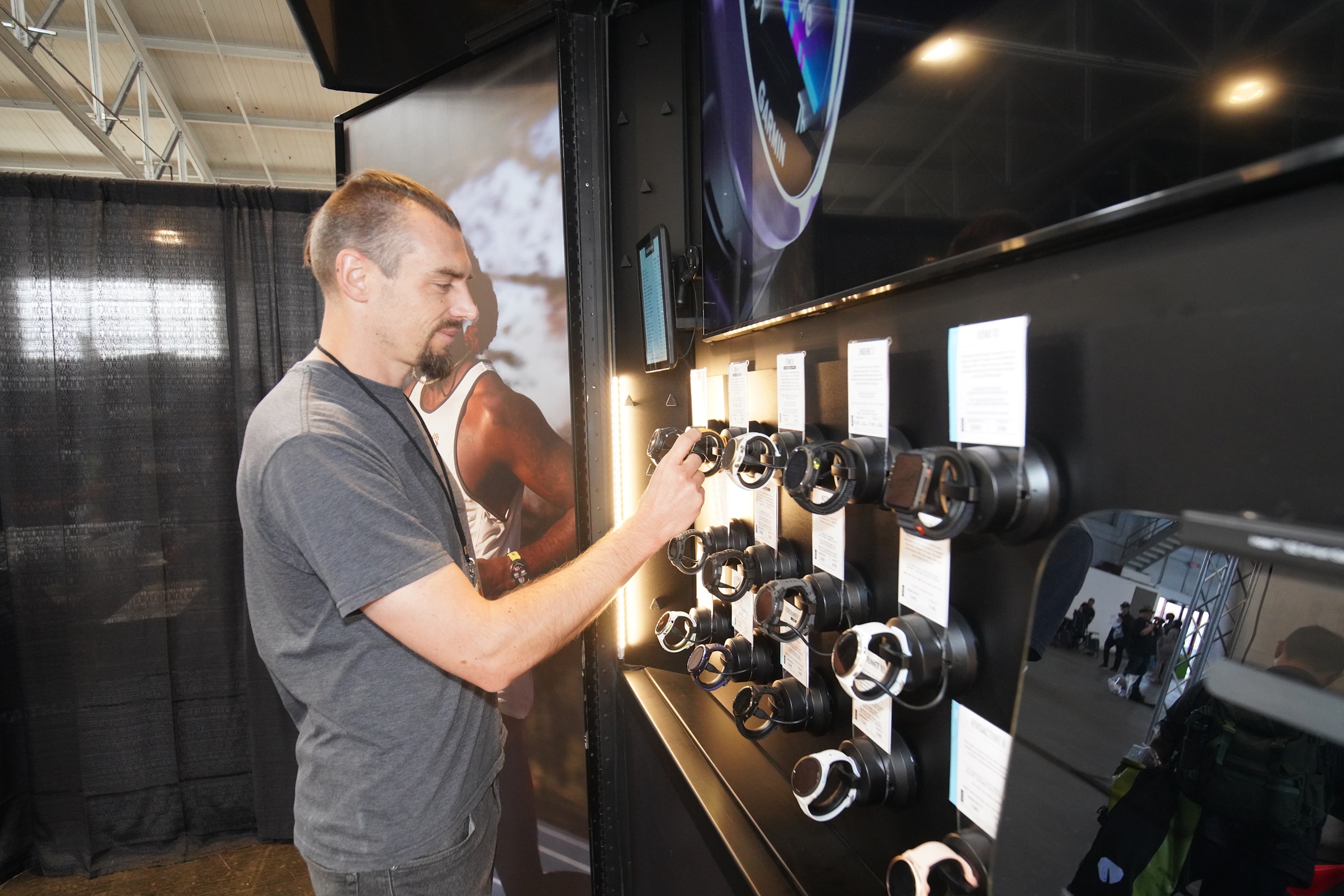
Garmin Forerunner 970: From Running Watch to Running-Analysis System | Pt. 1 of Experiment
Going from the 10 years old Garmin Forerunner 735XT to the newest Garmin Forerunner 970, avid San Francisco runner Scott Benbow is putting the new equipment through its paces. Will the new technology beat an old classic?
Written by Scott Benbow
Edited by Pavlína Marek
For the past decade, I have trained with a Garmin Forerunner 735XT, a watch I liked so much that I kept using it long after Garmin had moved on to newer, brighter, smarter models. The 735XT did what I needed it to do. It recorded my runs, tracked my pace, heart rate, distance, and time.
There are many new features on the Forerunner 970. The watch has maps, music, Garmin Pay, a bright full-color display, advanced health tracking, a flashlight, navigation tools, training plans, race widgets, and smart notifications. I’ve had this watch for three weeks and I am still learning about its functionality. But for this review and a follow-up review later this year, I want to focus on a specific question and some discrete metrics.
Can the Forerunner 970 help me understand my running better?
That question is personal for me. I qualified for the Boston Marathon in 2022 and 2023, ran Boston in 2022, and then had to withdraw from the 2023 race because of injury. It has taken a lot longer than I expected to rebuild, but I am now training again with the goal of qualifying for Boston by the end of 2027. At this stage, I am less interested in being told that I ran ten miles than I am in understanding what those miles cost me, whether my body is absorbing the work, and whether I am becoming more efficient over time.
For that reason, I am going to use this first article to explain the three metrics I plan to follow most closely over the next six months: Step Speed Loss & Running Economy, Running Tolerance, and HRV Status. Then, after six months of training with the Forerunner 970 and HRM 600, I will write Part 2 and report what I learned. Did the scores improve? Did they tell me anything useful? And did they help me train more effectively? Or did I simply acquire more evidence to confirm that running after age 60 requires patience, humility, and occasional negotiations with one’s ankles, knees, hips, and hamstrings?
Step Speed Loss & Running Economy
The first metric I am interested in combines Step Speed Loss as a component of Running Economy.
Garmin describes Step Speed Loss as the amount of speed a runner loses when the foot hits the ground. Every stride includes a small braking effect. Your foot lands, your body absorbs impact, and then you have to propel yourself forward again. If you lose less speed at ground contact, you are generally running more efficiently. If you lose more, your body may be working harder than necessary to maintain the same pace.
A lower Step Speed Loss should therefore suggest a smoother, more efficient stride, while a higher number may indicate that I am wasting energy with each landing. That is why I will be watching Step Speed Loss as a clue to whether my overall Running Economy is improving.
Running Tolerance
The second metric is Running Tolerance. This is Garmin’s attempt to estimate how much running load my body may be prepared to handle. That is an interesting number for anyone returning from injury. As a runner, I know the workouts I think I should be able to do. I am less reliable when it comes to recognizing whether my bones, tendons, muscles, and connective tissue are ready for those workouts.
Running Tolerance may help fill that gap. I do not expect a watch to make training decisions or to replace common sense, pain signals, or a good coach. But if the Forerunner 970 can help me see whether I am building capacity gradually or piling stress on top of fatigue, that could be valuable. For a masters runner, that may be one of the most important uses of modern training technology.
Heart Rate Variability (HRV) Status
The third metric is HRV Status, which is the variation in time between heartbeats. HRV can provide clues about recovery, stress, sleep, and how the body is responding to training. As a trend, HRV Status may help answer a question every runner faces: am I ready to train hard, or am I carrying fatigue that has not yet become obvious?
Revealing everything on the Analyst’s Couch
A low HRV reading will not automatically send me to the couch, and a good reading will not give me permission to do something foolish. But if the trend consistently matches how I feel, sleep, train, and recover, it may become a useful part of the decision-making process.
What I like about these four metrics is that they connect to the questions that matter most to me right now: am I becoming more efficient? Building durability? Managing impact? Recovering well enough to absorb the training?
See my results in Six Months
This is the beginning of an experiment. For the next six months, I will train with the Garmin Forerunner 970 and HRM 600, paying particular attention to Step Speed Loss & Running Economy, Running Tolerance, and HRV Status. I will still use the watch for all the usual things runners care about: pace, distance, time, heart rate, and workouts. But the deeper question will be whether the Forerunner 970’s more precise metrics help me understand my training in a way my old watch could not.
Six months from now, I will report whether the watch puts me on the path back to steady mileage, better recovery, and fewer bad decisions.

About Scott
Scott Benbow is a San Francisco Marathon Ambassador, attorney, nonprofit specialist, and passionate SFM runner. He lives in San Francisco and runs the hills of our incredibly beautiful city with us every year.
Scott’s website: FoundationTrail.com