How European Running Culture Blends City Running and Trails, from Pavement to Peak, from Parkrun to Pub
Four years ago, I moved (back) to Europe. You see, “back” is in parenthesis because, after spending the most formative years of my adult life in the US, I had become a whole new person. Most importantly, I had become a runner. I didn’t expect the European running culture to be much different from what I knew from California. Oh boy, was I wrong.
Written & edited by Pavlína Marek
I should probably start with a small disclaimer so that there are no misinterpretations and I don’t accidentally start a runner war. This article is to simply point out differences and perhaps convince you to try and do some running when you visit the continent.
- This is written from my personal experience which, of course, means that not everyone would feel the same. I’m simply sharing what differences I’ve noticed.
- Every country in Europe is unique, with its own language, culture, and running scene. I can speak to running in Czechia, France, and the UK, as that’s where I spend the most time running. As for the US, I ran mostly in California and Nevada.
- I am not saying that one is better than the other. I love the running communities I was a part of in the US as much as I do those that I’m a part of here in Europe. There are many similarities, especially when it comes to trail and ultra running.
This is not a country by country guide. (Not yet, anyway.) Think of this as the a beginner’s notebook about what you’ll notice when you run in Europe and it feels different, even if you can’t quite name why. Later, we might go deeper, focus on specific cities and routes, look at what to pack and how to not accidentally plan a “casual” run that turns into 1,200 meters of vert.
With that being said, let’s dive in with today’s installment of this European Running series: blending road and trail running so seamlessly that you have no idea where one ends and the other begins.
In Europe, Road Running and Trail Running Aren’t as Separate
One day you’re threading through a city on smooth pavement, dodging commuters and the occasional suitcase wheel. The next day you’re climbing a muddy shoulder of a mountain with your hands on your knees, trying to keep your breathing quiet enough that it doesn’t prompt a hiker you’re currently passing to call 112 (the universal emergency number in Europe—save or remember it for your trip). And neither feels like a special trip or a purposefully planned weekend long run. It’s just running.
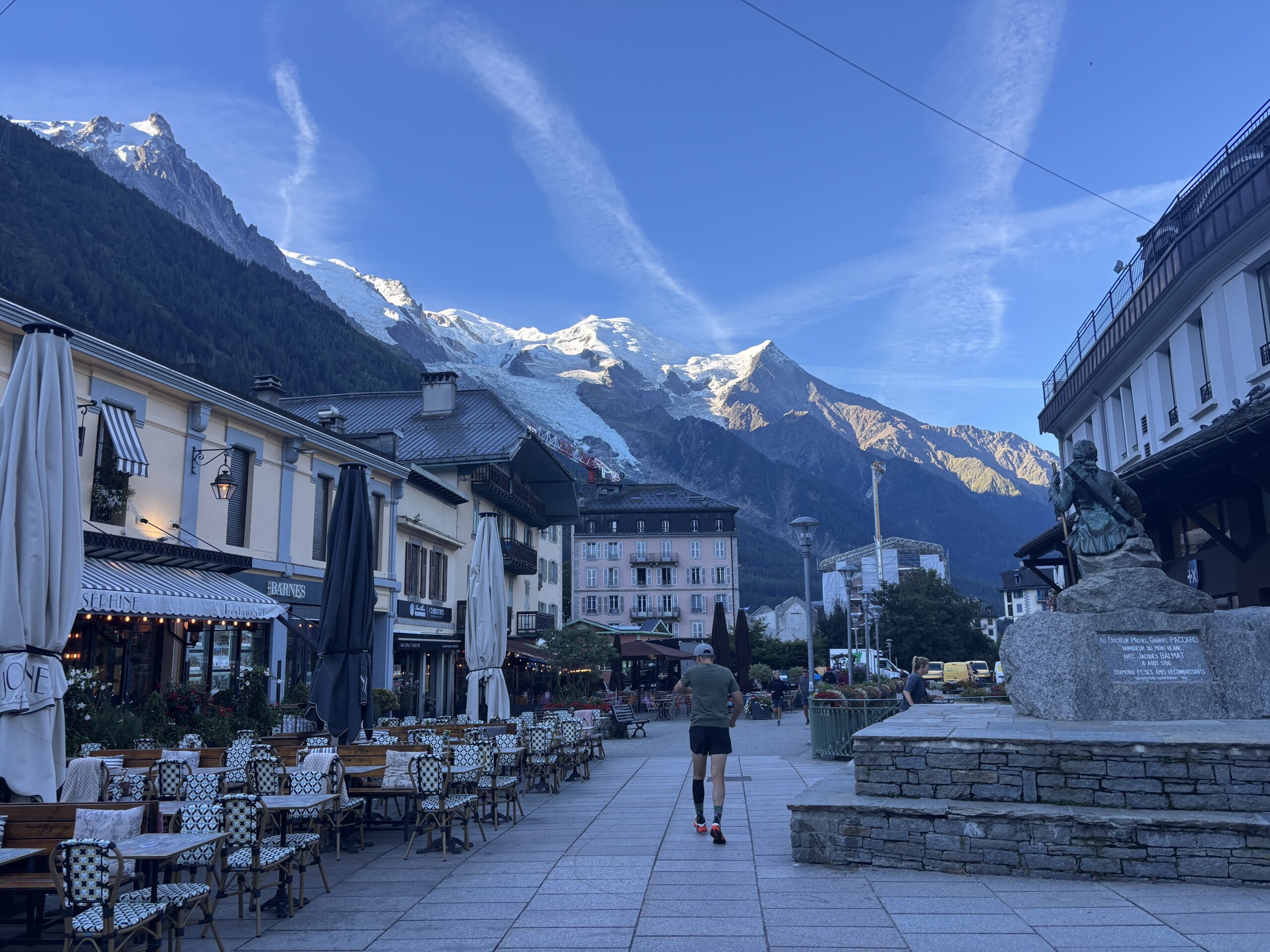
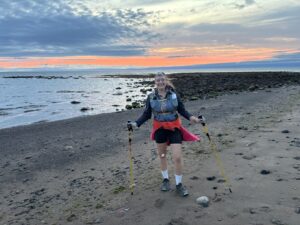
I have two examples where I can show this beautifully. First, an ultra in Scotland, where the weather has a personality of its own and the ground under you changes every few minutes. Second, Chamonix (especially during UTMB week), where it feels like outdoor sports (and, during UTMB, running specifically) are the main thing and everything else can fit around it. You start on the track and are up and away in the mountains in ten minutes.
Specified Training vs Part of the Everyday
It made my weekend long runs feel more like training, more like part of the plan, and more like a unique adventure. It required preparation and planning, and I had to pack extra snacks to leave at the trailhead in the car.
In a lot of Europe, the boundary is much thinner. You can start on sidewalks, cut through a park, hop onto an old footpath behind a neighborhood, connect to a forest track, and suddenly you’re climbing a rocky hill that absolutely counts as a trail run. Then you drop back down, grab a pastry, and it doesn’t even feel like you did something unique.
The adventure starts literally on your doorstep, not a long drive away. It also feels more everyday, more muted. It becomes part of your life. And instead of leaving extra snacks in your car at the trailhead, you simply pop into a café and get a croissant along—or after—your run.
Public access & transport FTW
This infrastructure is what helps shape this part of European running culture. Dense towns help. Transit helps. Historic rights of way help, holding old paths that have existed longer than most countries’ modern road systems. (In parts of the UK, I’ve run on paths older than the US Constitution. No kidding, I half expected to be abducted by fairies.) And then there’s the big one: mountain access. Even when you’re not in the Alps, there’s often some kind of climb nearby, some ridge or bluff or moorland that changes the way people train. And if it’s not literally on your doorstep, it’s only a short bus ride away.
The thesis of this whole piece is simple: European running normalizes variety. Surface, elevation, community,… it’s not as clearly categorized as when I lived in the Bay Area. So runners become naturally versatile, almost by accident.
Also, here are quick, loose definitions I’ll be using so we’re on the same page.
- “City running” here means running in or near urban centers. Pavement, promenades, sidewalks, parks, canal paths, river paths. Often shared space.
- “Trails” means anything off the main road network. Dirt, gravel, forest paths, alpine singletrack, boggy moorland, rocky climbs. Sometimes marked. Sometimes just obvious because it’s used a lot.
No gatekeeping in either direction. If you’re running, you’re running. The way European running culture stitches these together is the point.
What Defines European Running Culture
It’s easy to lean on stereotypes. Old towns. Cobblestones. Alps. Espresso. Heck, I’ve just done it myself. But what felt real, on the ground, was more specific. There were a few things that kept repeating between Scotland and Chamonix, even though they couldn’t be more different.
1. Accessibility
Routes start at your doorstep, or just a short train ride away. The “barrier to entry” is low in a practical way. In Scotland, you’re never far from open land. In Chamonix, you can take an almost-free train up and down the valley and run back to your accommodation. The switch from road to trail is natural, without a whole lot of logistics.
2. Place-based identity
Whether you’re out on the trails, in a town on the pavement, or somewhere in between, runs are tied to geography and history. Paths follow old canals, promenades, footpaths, and passes instead of being plopped wherever convenient at the time. God forbid you see a grid. Even when you don’t know the story, you feel that the route existed long before you showed up with a GPS watch.
3. Part of life
Running isn’t always treated like a training session complete with pace zones. People run as transport, as lifestyle, as a normal part of being outside. You see it in the way cities have runner-friendly corridors and the way mountain towns assume you’ll be out there.
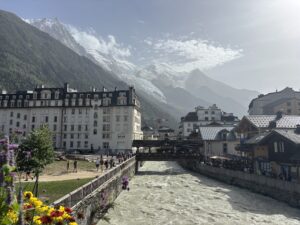
Cities Are Dense, Scenic, and Surprisingly Runner-Friendly
European cities tend to be compact. That sounds like a travel brochure line, but it matters when you’re running. It means that you can find a loop quickly, and that you’re never too far away from a riverside path, a promenade, a park, or a car-light zone. A lot of cities have routes that make planning easy, even if you don’t know the area. Follow the water, find a path, and follow tahat path until you feel like turning around.
- You run early, before the sidewalks fill up. Mornings feel like the city belongs to you for a bit, then it changes, especially during touristy seasons.
- You keep your routes simple. People stick to park loops, waterfront out and backs, and look up at the landmarks instead of their watch.
- You accept surface changes. Generally, there will be more of those than you’ll find in American cities. You’ll go from pavement to cobblestone to gravel to packed dirt. It’s not a bug, it’s a feature.
One of the most surprising things, if you’re used to trails being a “destination,” is how normal trail access feels in many parts of Europe. You’re probably getting the gist by now because at this point, I’m just reiterating what has been said, but you can get out of the streets and onto a nature trail very quickly, even in densely-populated areas. Plus, you can turn a run into a point to point without getting stranded, thanks to the many public transport options not only in cities but outside them, too.
The “Pavement to Peak” Mindset & How Runners Naturally Build Versatility
What I noticed in general is a quieter training philosophy. Less obsession with sessions, more emphasis on consistent movement, time on feet, being outside, exploring the land, showing up,… basically the trail-running mindset applied to any run. (Now, of course, this varies, and applies mostly to the everyday runner. The pros are a whole different story!)
Sometimes it’s a nice gravel path, sometimes a soft line through grass that becomes a bog, and other times yet it’s an immediate rocky scramble straight up a mountain starting basically from the town square (an experience replicable in the Bay Area by running from the square of Mill Valley to the top of Mt Tamalpais).
When you mix surfaces the way European running culture almost encourages you to, you build a kind of durability you have to specifically train for if you only stick to roads and park paths in the US.
Your feet and ankles get stronger because they have to, and your legs learn climbs because climbs are part of life. You get confident moving on imperfect ground, which is a big deal if you’ve mostly run on predictable pavement.
Now, you may argue that, in trail and mountain running, you automatically learn that in the US, too. And you’d be right! Just take a look at some of the great runners you’ll see in the Broken Arrow Skyrace or, frankly, at most trail races you’ll head to. However, it seems to be more of an everyday experience when it comes to European running culture. You don’t have to choose whether you’ll do road or trail. You just run, and you’re almost automatically doing both.
Community and Parkruns Are Everywhere
You’ll find your people quickly, and you don’t even have to necessarily try to be a part of a run club or a runner friend group. You’ll get adopted by three friends who’ll pick you up at the end of your race, feed you, and give you a bed to sleep in and a bathroom to take a shower. I’m not even exaggerating. This is exactly what happened when I met a fellow runner on a flight from Kilimanjaro to Addis Ababa, and it turned out we were signed up for the same race months down the line
These groups also lower the barrier for visitors. It’s hard to overstate how much easier it is to feel “plugged in” when you show up to a trailhead or a group run and you’re not the outsider doing laps alone. I once met a group of runners in their fifties/sixties at a trailhead where I just happened to be at the right time. They invited me to join their run and bought me coffee afterward, just like that. I now join them for a jaunt whenever I’m in the area, and I send postcards from my travels to one of them to share with the group.
There are performance-focused groups, and there are social groups, and then there’s everything in between, and often they all exist under the same umbrella. You’ll have people doing serious sessions and other people just showing up for the chat and the coffee or the pint afterward.
‘Till Next Time!
Welcome to running in Europe. The TL;DR is that roads and trails usually aren’t such separate categories here. You can go from pavement to peak pretty quickly. Places just… connect here. I think it’s got a lot to do with the general walkability of places in Europe.
What I’m still thinking about from Scotland is the connection and friendliness inside a genuine (albeit very voluntary, and very Type 2 Fun) sufferfest. The way it didn’t feel lonely. It felt shared, even when you were out in the weather doing your own battle.
What I remember from Chamonix is the hum of it. The sense that mountains and running and daily life can all sit in the same time and place. You can leave work and be out in the mountains within 15 minutes using only your two feet.
For now, if you’re planning a trip, don’t forget to pack your shoes, run to explore, and leave room for that one turn that turns a normal run into a story. That’s the point.