Before the Starting Line: Discovering Fort Mason | Scott Benbow’s City Guide
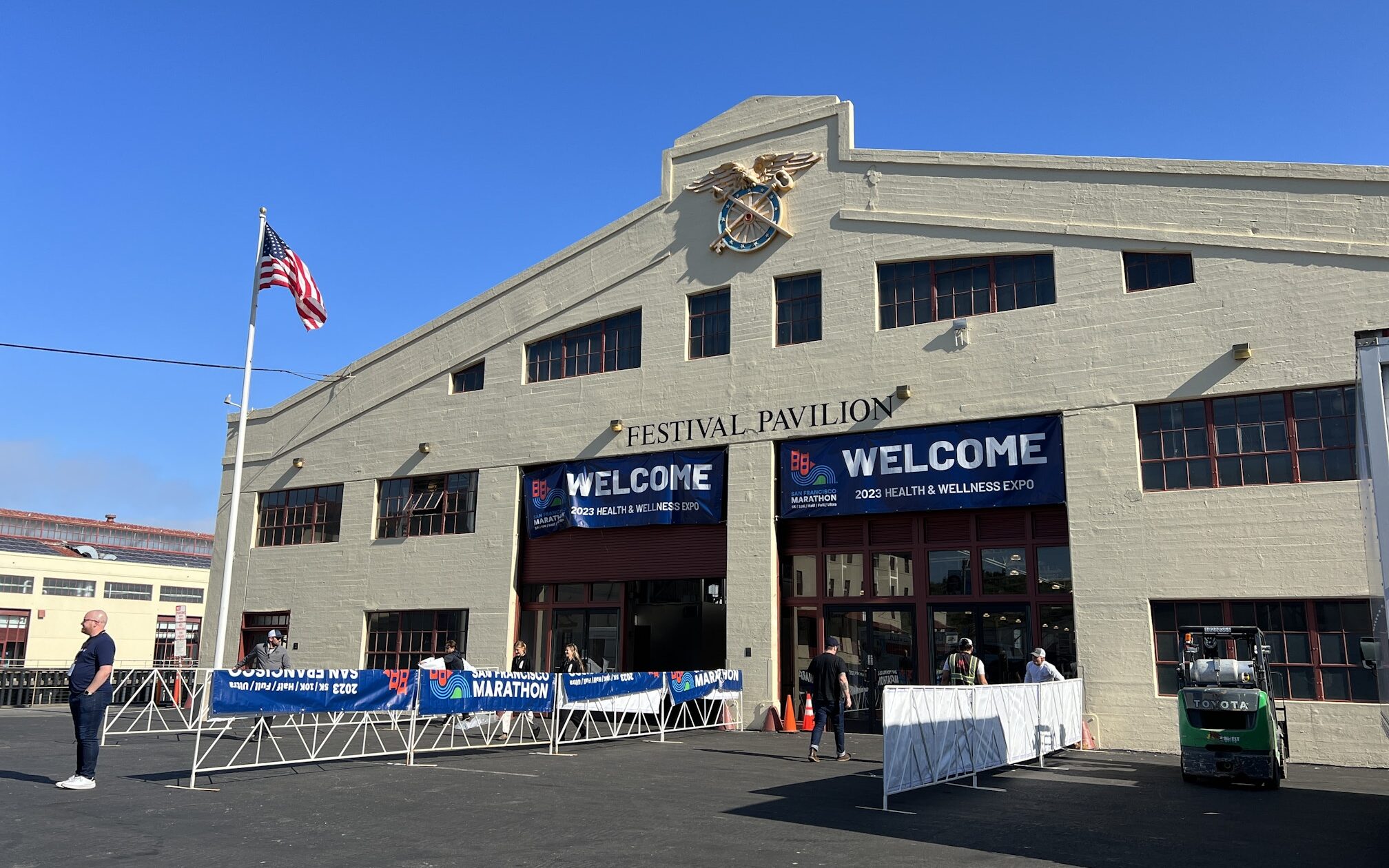
The San Francisco Marathon Expo is where race weekend begins. You’ll arrive at Fort Mason to pick up your bibs, browse the latest running gear, and feel the excitement that builds whenever thousands of people gather before a marathon.
Written by SFM Ambassador Scott Benbow
Edited by Pavlína Marek
I look forward to the Expo every year because I run into friends I’ve only met at other marathons over the years. Fort Mason as the host has a fascinating history. The massive buildings along the waterfront tell a story about San Francisco’s military past and the City’s ability to give historic places a completely new life.
Military History
Fort Mason began as a coastal defense post during the Civil War and was named for Richard Barnes Mason, a former military governor of California. Its role changed dramatically in the early 20th century, when the U.S. Army constructed three piers and their enormous warehouse sheds.
By 1915, the three piers were connected to San Francisco’s rail system through a tunnel beneath Upper Fort Mason. Supplies arriving by train could be moved directly to the waterfront and loaded onto Army ships bound for Hawaii, the Philippines, Alaska, and other American military posts across the Pacific. In the parking lot near the Expo, you can still see the dormant train tracks and the blocked western portal of the tunnel.
During World War II, Fort Mason became the headquarters of the San Francisco Port of Embarkation. More than 1.6 million military passengers and a high volume of cargo passed through the port on their way to the Pacific.
The Conversion Begins
The Army’s transportation operations continued after World War II, but Fort Mason gradually became less important as military shipping shifted elsewhere around the Bay. The National Park Service assumed responsibility for the site in the 1970s, and the former warehouses were reinvented as the Fort Mason Center for Arts & Culture.
That transformation is especially visible during the Marathon Expo. The piers still feel industrial. Their sheer size, exposed structural elements, and expansive interiors make it easy to imagine pallets of supplies waiting to be loaded onto ships. Now, however, those same spaces accommodate race exhibitors, community gatherings, art fairs, performances, and celebrations. Fort Mason has preserved the character of its historic architecture without freezing the property in the past.
What to See While You’re There
If you have time before or after visiting the Expo, one of Fort Mason’s best-known destinations is Greens Restaurant. Founded by the San Francisco Zen Center in 1979, Greens helped establish vegetarian cooking as a serious American cuisine. Its changing menus emphasize organic produce from local farms and the Zen Center’s Green Gulch Farm. The dining room occupies a former warehouse, but its floor-to-ceiling windows provide panoramic views of the Marina, the Marin Headlands, and the Golden Gate Bridge. Try to book a table next to the window if you go.
The store is packed with paints, pens, sketchbooks, specialty papers, crafts, and other materials for artists, students, and curious visitors. FLAX also offers workshops and carries San Francisco-themed gifts. Even if you are not an artist, it is the kind of store where a five-minute visit can easily become half an hour.
Most runners will arrive at Fort Mason focused on practical matters: finding the Expo entrance, getting their bib, checking the race map, and making sure they have everything they need for Sunday morning. It is worth slowing down for a few minutes.
Look at the scale of the piers, step outside to see the Bay, and consider how thoroughly San Francisco has transformed this former military port. The Expo may be the official beginning of your marathon weekend, but Fort Mason gives you an introduction to the history, architecture, food, art, and reinvention that make this city such a memorable place to run.
About Scott
Scott Benbow is a San Francisco Marathon Ambassador, attorney, nonprofit specialist, and passionate SFM runner. He lives in San Francisco and runs the hills of our incredibly beautiful city with us every year.
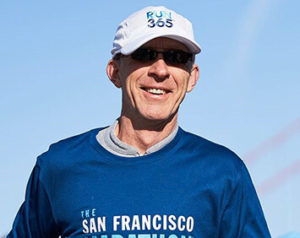
Scott’s website: FoundationTrail.com
Scott’s Previous SFM City Guides
Pedestrian Day to Race Day on the Golden Gate Bridge